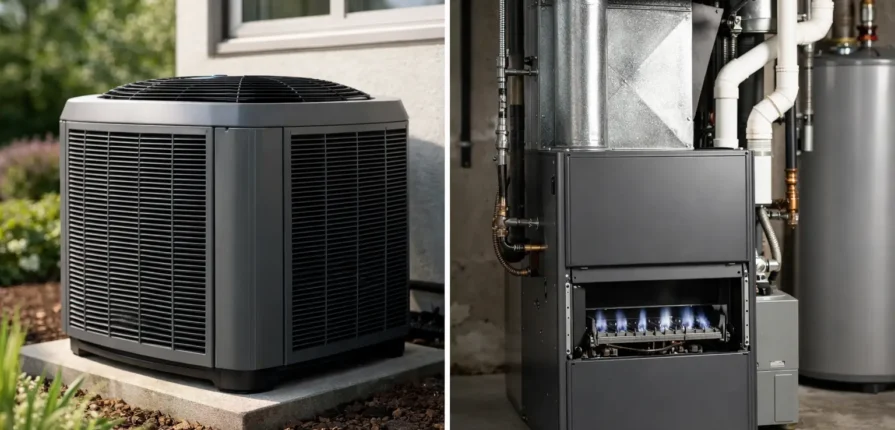
A heating replacement rarely happens at a convenient time. When your current system is noisy, unreliable, or facing an expensive repair, the heat pump vs furnace decision can affect your utility bills, indoor comfort, and peace of mind for years. The right answer depends on your home, local winter temperatures, available fuel sources, and how you use your heating and cooling system.
A furnace remains a dependable choice for many homes, particularly where winters are consistently severe or natural gas is readily available. A heat pump can provide both heating and air conditioning with impressive efficiency, especially in moderate weather. Understanding the practical differences helps you choose equipment that performs when your family needs it most.
Heat Pump vs Furnace: The Main Difference
A furnace creates heat by burning fuel, usually natural gas or propane, or by using electric resistance elements. It then distributes warm air through your ductwork. Gas furnaces are valued for producing strong, fast heat even when outdoor temperatures are far below freezing.
A heat pump does not create heat in the same way. It moves heat from one place to another. During winter, it draws available heat from outdoor air and transfers it indoors. In summer, the process reverses, allowing the system to cool your home like a central air conditioner.
That difference matters because moving heat can require less energy than generating it. But a heat pump’s output and efficiency can decline as outdoor temperatures drop. Modern cold-climate models have improved significantly, yet a furnace still offers dependable high-capacity heating in the harshest conditions.
When a Heat Pump Makes Sense
A heat pump is often a strong option for homeowners replacing both an air conditioner and an older heating system. Because one outdoor unit handles heating and cooling, it can simplify your equipment setup while providing year-round comfort.
Lower energy use in mild and moderate weather
Heat pumps can be very efficient during spring, fall, and moderately cold winter days. Instead of relying solely on electric resistance heat, they transfer heat using refrigeration technology. For homes that currently use electric baseboard heat, electric furnaces, or older inefficient equipment, the reduction in electricity use can be meaningful.
The exact savings depend on electricity rates, your home’s insulation, thermostat habits, duct condition, and the heat pump’s efficiency rating. A properly sized system matters just as much as the model selected. An oversized unit may cycle on and off too often, while an undersized unit may struggle to maintain comfort during cold snaps.
Heating and cooling in one system
If your home needs a new air conditioner as well as a heating upgrade, a heat pump deserves serious consideration. It provides central cooling in summer and efficient heat in cooler weather, without maintaining two separate primary systems.
This can be especially appealing for homeowners looking to reduce reliance on fossil fuels. It also works well for additions, garages, and areas without existing ductwork when installed as a ductless mini-split system.
A practical choice for hybrid systems
For many cold-climate homes, the best solution is not strictly one system or the other. A dual-fuel setup pairs a heat pump with a gas furnace. The heat pump handles heating during milder conditions, and the furnace takes over when temperatures fall below a set point.
This approach can balance energy efficiency with reliable cold-weather performance. A qualified HVAC contractor can help determine the changeover temperature based on equipment capacity, fuel prices, and the comfort needs of your household.
When a Furnace Is the Better Choice
A high-efficiency furnace remains one of the most reliable heating solutions available. It is designed for consistent performance during freezing weather and can quickly raise indoor temperatures after a door is left open, a thermostat setback ends, or a cold front moves through.
Strong heat during extreme cold
A furnace produces heat directly, so its heating capacity is not dependent on extracting heat from cold outdoor air. For homes in areas with long, bitter winters, this reliability can be the deciding factor.
Gas furnaces are also familiar to many homeowners and service technicians. When properly installed and maintained, a modern high-efficiency furnace can provide dependable comfort for many years. Annual maintenance is essential to keep burners, venting, safety controls, and airflow operating correctly.
Lower upfront cost in some replacements
If your central air conditioner is still in good condition and only the furnace needs replacement, installing a new furnace may cost less upfront than converting to a heat pump system. The final price depends on the condition of your ductwork, electrical service, existing gas line, venting requirements, and any needed code updates.
A low initial price should not be the only factor. Equipment that is incorrectly sized or poorly installed can waste energy, create uneven temperatures, and lead to premature repairs. Ask for a clear assessment of the full installation scope before approving work.
Fast, familiar comfort
Some homeowners simply prefer the feel of furnace heat. Supply air from a gas furnace is generally warmer than the air delivered by a heat pump, even when both systems maintain the same thermostat setting. A heat pump may run longer and more steadily, which can create even temperatures but feel different from the short, hot cycles of a furnace.
Neither approach is automatically better. Comfort is personal, and your home’s insulation, windows, duct design, and airflow all influence how the system feels room to room.
Costs: Look Beyond the Purchase Price
Comparing equipment prices alone can lead to the wrong decision. A furnace may have a lower replacement cost if compatible equipment and infrastructure are already in place. A heat pump may cost more initially, particularly if electrical upgrades, new controls, or duct modifications are required.
Operating cost is equally important. Natural gas, propane, and electricity prices vary by location and can change over time. Heat pump efficiency also changes with outdoor temperature. A professional load calculation and operating-cost estimate provide a far more useful comparison than a general online estimate.
Ask your contractor to explain the efficiency ratings of the proposed equipment, expected maintenance needs, warranty coverage, and any available rebates or financing options. Those details help you compare total ownership cost instead of focusing only on the installation day.
Your Home Can Decide the Outcome
Before choosing a system, evaluate the home itself. Heating equipment cannot fully compensate for major air leaks, poorly insulated attics, damaged ductwork, or rooms that receive little airflow. Addressing these issues may improve comfort regardless of whether you install a heat pump or furnace.
Your contractor should inspect more than the old unit. A proper recommendation considers your home’s square footage, insulation levels, window exposure, duct capacity, electrical panel, fuel availability, and heating load. For light commercial properties, occupancy schedules, equipment heat gain, and zoning requirements also matter.
Be cautious of anyone who recommends a replacement based only on the size of your existing furnace or air conditioner. Older equipment may have been oversized from the start, and home improvements may have changed your heating needs.
Installation Quality Protects Comfort and Safety
The best equipment cannot perform as intended without professional installation. Furnace work requires correct venting, gas connections, combustion testing, drainage, and safety control checks. Heat pump installation requires accurate refrigerant charging, proper electrical connections, condensate management, and suitable outdoor-unit placement.
For either system, ductwork and airflow are critical. Restricted return air, leaky ducts, or poorly balanced supply runs can cause uneven temperatures, higher utility bills, and unnecessary wear. Licensed, experienced technicians should verify the system’s operation rather than treating installation as a simple equipment swap.
Airmaxx Heating & Air Conditioning helps homeowners and property operators evaluate heating options based on practical comfort, safety, and budget needs. Whether you need a straightforward furnace replacement, a heat pump installation, or a dual-fuel recommendation, the goal should be dependable performance in every season.
The most useful next step is a home-specific estimate before your current system fails completely. With the right sizing, installation, and maintenance plan, you can choose heating equipment that keeps your space comfortable without leaving your decision to the next cold night.