A room that stays hot no matter how low you set the thermostat usually points to a system design problem, not just an old AC. That is why ductless air conditioner installation has become a practical solution for homeowners and small business owners who need targeted cooling without the expense and disruption of adding ductwork.
Ductless systems, often called mini-splits, are a strong fit for older homes, additions, converted basements, sunrooms, offices, and spaces with uneven temperatures. They give you direct control over specific areas, which can improve comfort and reduce wasted energy. But the results depend heavily on how the system is sized, placed, and installed.
What ductless air conditioner installation actually includes
A proper installation is more than mounting an indoor unit on the wall and connecting it to an outdoor condenser. The work starts with evaluating the space, the insulation level, the window exposure, ceiling height, and how the room is used. A bedroom, home office, retail area, and restaurant prep space all cool differently, even if the square footage looks similar on paper.
From there, the installer determines the right system capacity. Oversizing is a common mistake because bigger sounds better, but an oversized unit can short cycle. That means it turns on and off too often, which can reduce efficiency, create uneven temperatures, and put extra wear on components. An undersized unit has the opposite problem – it runs too long and struggles to keep up during peak summer heat.
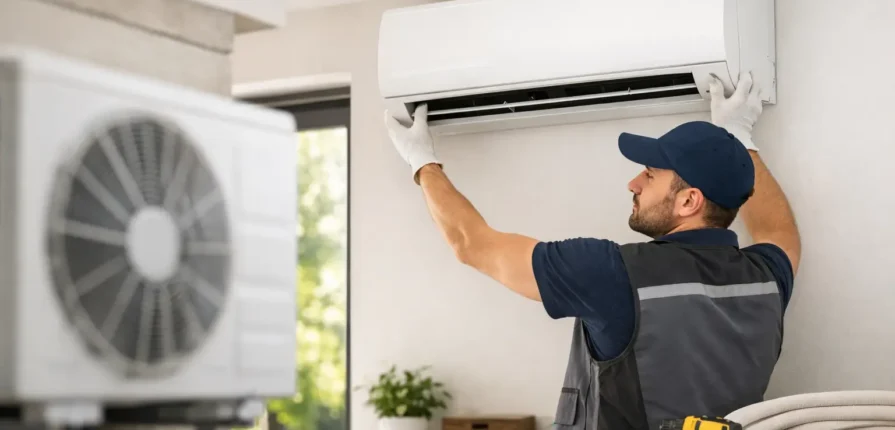
The installation itself typically includes mounting the indoor air handler, placing the outdoor unit, running refrigerant lines, connecting electrical components, installing the drain line, sealing wall penetrations, testing the system, and verifying operation. Good workmanship matters at every step because even a high-quality unit can underperform if the installation is rushed or poorly planned.
Where a ductless system makes the most sense
Ductless cooling is not the right answer for every property, but it solves a lot of common comfort issues. If you have a home with no existing ductwork, installing central air can be invasive and expensive. In that case, a ductless system can deliver reliable cooling with far less construction.
It is also a smart option when one part of the property never seems comfortable. Maybe the second floor gets stuffy, the addition is always warmer than the rest of the house, or a detached office needs its own cooling source. Instead of forcing the whole building to work around one problem area, a ductless system treats that zone directly.
For light commercial spaces, ductless equipment can be useful in server rooms, small storefronts, offices, and treatment rooms where precise temperature control matters. The biggest advantage is flexibility. The trade-off is that system design has to match the layout carefully, especially if you are trying to cool multiple rooms with one outdoor unit.
Key decisions that affect performance
Sizing the system correctly
Correct sizing is one of the most important parts of ductless air conditioner installation. Square footage is only the starting point. Sun exposure, insulation, air leakage, occupancy, and equipment loads all affect how much cooling a room needs.
A west-facing room with large windows may need more cooling than a shaded room of the same size. A finished attic may need a different approach than a first-floor family room. This is why a quick estimate based only on room dimensions can lead to disappointing results.
Choosing the best indoor unit location
Placement affects airflow, comfort, and appearance. The indoor unit should be positioned where it can distribute air evenly across the room without blasting directly onto a bed, desk, or seating area. It also needs proper clearance for service and cleaning.
Sometimes the most visually discreet location is not the best mechanical location. That is where experience matters. A reliable installer balances comfort, access, and aesthetics instead of focusing on just one of those factors.
Positioning the outdoor unit
The outdoor condenser needs stable mounting, enough clearance, and a location that allows proper airflow and service access. It should also be protected from avoidable issues such as heavy debris, poor drainage, or snow buildup, depending on the installation environment.
This step is often overlooked, but outdoor placement can affect both performance and long-term reliability. A poorly located condenser may be harder to maintain and more likely to develop preventable problems.
What can go wrong with poor installation
Ductless systems are known for efficiency, but that reputation depends on correct installation. If the refrigerant charge is not set properly, the drain line is poorly pitched, or the electrical work is incomplete, you may end up with water leaks, weak cooling, nuisance shutdowns, or premature system wear.
Improper line set routing can also affect appearance and protection. Exposed lines that are not secured well or insulated properly may be more vulnerable to damage and energy loss. Small details matter because HVAC performance is rarely about one big mistake. More often, it is a series of smaller shortcuts that add up over time.
Code compliance is another major issue. Electrical connections, mounting methods, and system setup should all meet local requirements. For homeowners and property managers, that matters not just for safety, but also for inspections, insurance concerns, and long-term peace of mind.
Cost factors homeowners should expect
The price of ductless air conditioner installation varies based on the number of zones, equipment capacity, brand, installation complexity, electrical requirements, and the distance between indoor and outdoor components. A single-zone system for one room is usually more straightforward than a multi-zone setup serving several areas.
Access can also change the cost. A simple first-floor wall mount is generally easier than routing lines through finished spaces, masonry walls, or hard-to-reach areas. If electrical upgrades are needed, that adds to the overall scope as well.
The cheapest quote is not always the best value. If a low price means weak load calculations, poor placement, or minimal commissioning, you may pay more later through repairs, comfort problems, or shorter equipment life. For many property owners, the better question is not just what it costs today, but what kind of reliability and efficiency they are buying over the next several years.
Should you replace central air with ductless?
Sometimes yes, sometimes no. If your property already has well-designed ductwork in good condition, central air may still be the better whole-home solution. But if the duct system leaks, the layout causes chronic hot and cold spots, or parts of the building were added later without proper airflow planning, ductless may solve those issues more effectively.
Some homes benefit from a hybrid approach. A central system may handle the main living areas while a ductless unit covers a problem zone like an addition, loft, or converted garage. That kind of targeted upgrade can be more practical than replacing everything at once.
For budget-conscious owners, phased improvements can make sense. You do not always have to choose between doing nothing and doing a full system overhaul. A well-planned ductless installation can address the biggest comfort issue first and leave room for future upgrades.
Why professional installation matters
Ductless systems are compact, but the work is still technical. Refrigerant handling, electrical connections, condensate management, equipment startup, and system testing all need to be done correctly. This is not just about getting the unit to turn on. It is about making sure it runs safely, efficiently, and consistently in real-world conditions.
Experienced, licensed technicians know how to spot issues before they become callbacks. They can identify when a room needs a different unit style, when line routing will create service issues later, or when existing electrical infrastructure is not adequate. That level of planning helps avoid common problems that show up after the first heat wave.
For homeowners in the GTA, working with an established company like Airmaxx Heating & Air Conditioning also means you are dealing with a team that understands local service expectations, code compliance, and the value of fast support when comfort cannot wait.
What to do before you book ductless air conditioner installation
Before moving ahead, think about the rooms that need cooling most, how often they are used, and whether you want single-zone or multi-zone control. It also helps to consider noise preferences, wall space, and whether the project is part of a larger renovation or a standalone upgrade.
A good estimate should feel specific to your property. You should expect clear recommendations, an explanation of the installation approach, and realistic guidance on cost and performance. If everything sounds one-size-fits-all, that is usually a sign to ask more questions.
The best ductless installation is the one that fits the way you actually live or work. When the system is sized properly, installed cleanly, and supported by skilled service, you get more than cooler air – you get a space that feels comfortable when you need it most.