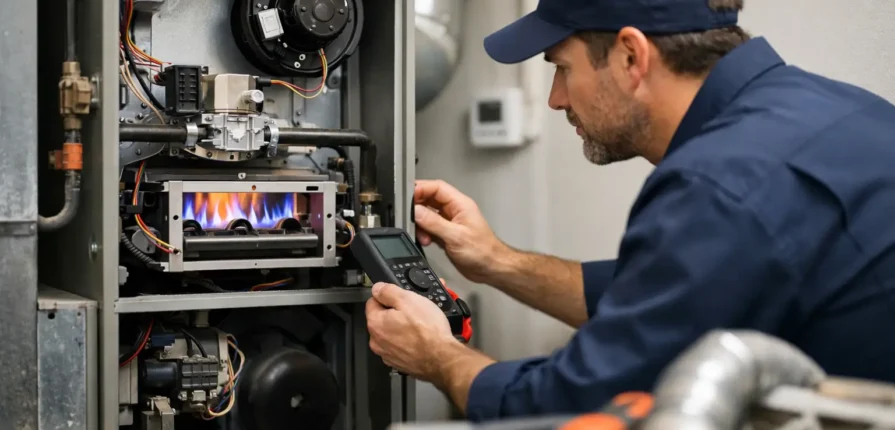
Your furnace starts, sends out warm air, then shuts off just a few minutes later. Soon, it starts again. If you are asking, “why is my furnace short cycling,” you are right to pay attention. This repeated on-and-off operation is not simply annoying. It can leave rooms unevenly heated, raise utility costs, and put unnecessary wear on parts that are expensive to replace.
A normal heating cycle varies with outdoor temperature, insulation, thermostat settings, and furnace size. On a cold day, a furnace may run for 10 to 15 minutes or longer before reaching the set temperature. Short cycling usually means it runs for only a few minutes, shuts down before the home is adequately warm, and repeats that pattern often. The cause may be as simple as a dirty filter, but it can also point to an overheating issue, venting problem, or equipment that needs professional repair.
Why Is My Furnace Short Cycling?
A furnace is designed to shut down when a safety control detects a problem. In other cases, the thermostat is receiving the wrong temperature reading or the system cannot move enough air. Finding the reason matters because bypassing a safety control or repeatedly resetting the furnace can create a larger problem.
A dirty filter is restricting airflow
A clogged furnace filter is one of the most common reasons for short cycling. Your furnace needs enough airflow across its heat exchanger to safely transfer heat into the ductwork. When a filter is packed with dust, pet hair, or debris, the furnace can overheat. Its high-limit switch then shuts the burners down to prevent damage.
The blower may continue running briefly after the burners stop, which is a helpful clue that overheating could be involved. Check your filter first, especially if it has not been replaced recently. Most standard filters should be checked monthly during heating season and changed as needed. Homes with pets, renovations, or higher dust levels may need more frequent changes.
Use the filter size and airflow rating recommended for your furnace. A very high-efficiency filter can be useful for indoor air quality, but the wrong type may restrict airflow in a system not designed for it. If a new filter does not solve the problem, do not assume the issue is resolved. The blower, evaporator coil, ductwork, or limit switch may still need inspection.
The thermostat may be in the wrong place or malfunctioning
Your thermostat tells the furnace when to turn on and off. If it is installed near a heat source, direct sunlight, a kitchen, fireplace, supply register, or drafty exterior door, it may sense a temperature that does not reflect the rest of the home. The thermostat can satisfy its setting too quickly, shut the furnace off, then call for heat again as the area cools.
A thermostat with weak batteries, loose wiring, incorrect programming, or a faulty sensor can cause similar behavior. Make sure it is set to Heat and that the temperature setting is several degrees above the current room temperature while you test the system. If you recently installed a smart thermostat, compatibility and wiring should also be checked. Not every furnace control system works correctly with every thermostat configuration.
Overheating is activating a safety switch
Your furnace has a high-limit switch that protects it from dangerously high temperatures. If this switch trips repeatedly, the furnace may ignite, run briefly, and shut off before the thermostat is satisfied. Restricted airflow is a frequent cause, but it is not the only one.
A weak blower motor, failing capacitor, dirty blower wheel, blocked return duct, closed registers, or undersized ductwork can all reduce airflow. A technician should test the temperature rise, blower performance, and safety controls rather than simply replacing the limit switch. The switch may be doing exactly what it is supposed to do by preventing heat exchanger damage.
A flame sensor or ignition problem is interrupting the burn cycle
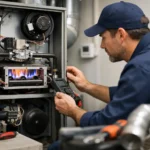
In a gas furnace, the flame sensor confirms that the burners have ignited safely. When the sensor is dirty or failing, the furnace may light for only a few seconds and then shut down the gas valve. It may try again several times before entering a lockout mode.
This issue can look like short cycling, although the shutdown happens much faster than a typical overheating cycle. A technician can safely inspect and clean the flame sensor, test ignition components, and check burner operation. Avoid trying to clean gas furnace components yourself if you are not trained to work on them. Incorrect handling can damage delicate parts or create a safety risk.
High-efficiency furnace venting or drainage may be blocked
High-efficiency furnaces use PVC intake and exhaust pipes, usually routed outdoors. Snow, ice, leaves, nests, or other debris can block these pipes and interfere with safe operation. A blocked condensate drain can also cause certain high-efficiency furnaces to shut down.
This is especially common during freezing weather, when ice can form at an exterior vent termination. You can visually check that the outdoor pipes are clear and unobstructed, but do not take apart venting, drainage, or pressure-switch components. Those parts need to be installed and tested correctly for safe combustion and code compliance.
The furnace may be oversized for the home
An oversized furnace produces heat faster than the house can absorb it. It reaches the thermostat setting quickly, turns off, and then starts again soon after. This can happen after a replacement when equipment was selected based only on the old furnace size or square footage, without considering insulation, windows, duct design, and heat loss.
Oversizing does not always mean immediate replacement is the only answer. Thermostat placement, blower settings, ductwork, and staging controls may be part of the solution. Still, a properly sized replacement is often the best long-term choice when an older furnace is failing and consistently short cycles despite repairs.
Safe Checks to Make Before Calling for Furnace Repair
A few basic checks can help rule out simple issues without putting your safety at risk. Turn the furnace off at the thermostat before replacing the filter, and do not remove sealed panels or attempt gas-related repairs.
- Replace a visibly dirty filter with the correct size and type.
- Confirm the thermostat is set to Heat, has fresh batteries if applicable, and is not located near a heat source or draft.
- Make sure supply registers and return grilles are open and not blocked by furniture, rugs, or boxes.
- Look at outdoor high-efficiency furnace vent pipes from a safe distance and clear loose snow or debris around the openings.
If your furnace resumes normal operation after changing the filter, continue monitoring it. If short cycling returns, the underlying airflow problem may not be limited to the filter.
When Short Cycling Needs Immediate Attention
Call for prompt professional service if the furnace repeatedly shuts down, blows cool air, trips a breaker, makes banging or grinding sounds, or displays an error code. A furnace that is overheating or locking out can leave your home without reliable heat when you need it most.
Treat a gas smell, a carbon monoxide alarm, soot around the furnace, or symptoms such as headaches, dizziness, or nausea as urgent safety concerns. Leave the building if you suspect a gas leak or carbon monoxide issue, contact emergency services or the gas utility as appropriate, and do not restart the furnace until it has been inspected.
Short cycling also deserves attention even when the house still feels warm. Frequent starts place stress on igniters, motors, relays, and control boards. Addressing a dirty blower or failing sensor early is usually more affordable than waiting for a complete no-heat breakdown.
What a Professional Furnace Inspection Can Find
A licensed HVAC technician can diagnose short cycling by looking beyond the visible symptoms. A proper visit may include checking the filter and duct airflow, thermostat operation, electrical connections, blower performance, combustion, venting, condensate drainage, flame sensor operation, and furnace safety switches.
For older equipment, the technician can also assess the condition of the heat exchanger and discuss whether repair remains practical. The right recommendation depends on the furnace’s age, repair history, efficiency, condition, and the cost of the needed repair. A newer furnace with a dirty blower may be an easy repair. A severely corroded furnace with repeated ignition problems may justify replacement planning instead.
Airmaxx Heating & Air Conditioning provides dependable furnace diagnostics and repair for homeowners and small commercial properties that need fast answers and reliable heat. A qualified inspection helps protect comfort now while preventing unnecessary energy waste and avoidable equipment damage later.
If your furnace is cycling every few minutes, do not wait for a cold night to turn a manageable issue into a no-heat emergency. Start with the safe checks, keep carbon monoxide detectors working, and arrange professional service when the pattern continues.