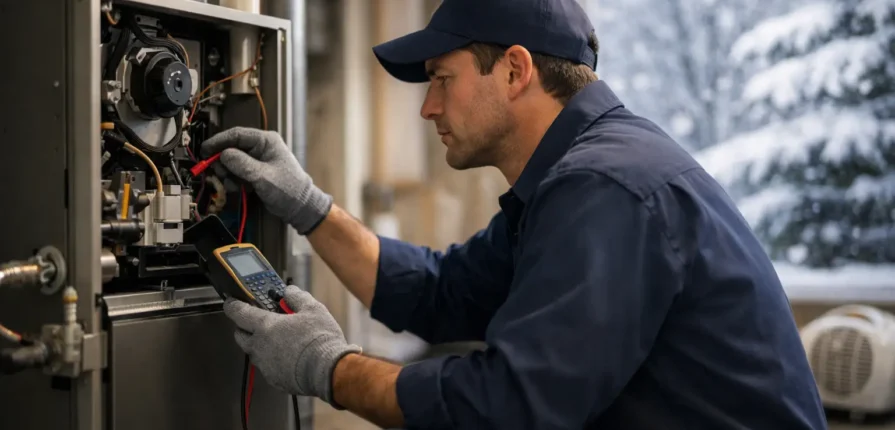
A furnace rarely fails at a convenient time. It usually happens during the first hard cold snap, after the system has been sitting idle for months, or late at night when your home needs heat most. Regular furnace maintenance gives you a better chance of avoiding that call, while helping your system run safely, efficiently, and reliably throughout the heating season.
For homeowners, landlords, and small business operators, maintenance is not about taking apart a furnace yourself. It is about handling a few simple tasks consistently and having a licensed HVAC technician inspect the parts that affect combustion, electrical operation, airflow, and safety.
Why Furnace Maintenance Matters Before Cold Weather
Your furnace works as a complete system. It needs clean airflow, a working thermostat, proper venting, dependable electrical components, and safe fuel combustion. When one area is neglected, the result can be uneven temperatures, higher utility bills, frequent cycling, or a sudden loss of heat.
A clean filter, for example, protects more than indoor air quality. It allows the blower to move air through the system without strain. A heavily clogged filter can contribute to overheating, reduced airflow, and unnecessary wear on the blower motor and heat exchanger. The same principle applies to vents, condensate drains on high-efficiency units, and outdoor intake and exhaust pipes.
Professional service also provides a safety check that homeowners cannot replace with a quick visual inspection. Gas furnaces produce heat through combustion. A trained technician can check for issues involving the burner assembly, ignition system, venting, gas connections, carbon monoxide risk, and heat exchanger condition. These are not areas to guess about or delay when something seems wrong.
A Practical Furnace Maintenance Routine for Homeowners
The most effective routine is simple: handle the basic checks during the season, then book professional maintenance before heavy winter use. If your furnace is older, has needed repairs recently, or heats a rental property or small commercial space, an earlier appointment can be especially worthwhile.
Check and replace the air filter
Inspect your furnace filter every month during periods of regular use. Depending on the filter type, household size, pets, renovations, and indoor air quality conditions, it may need replacement every one to three months. A home with shedding pets or ongoing construction dust may need more frequent changes.
Use the filter size and airflow direction marked on the existing filter or furnace cabinet. A filter that is installed backward or does not fit correctly can restrict airflow or allow dust to bypass the filter. If you are unsure which filter rating is appropriate, ask an HVAC professional. Higher filtration is not always better if it creates too much resistance for your equipment.
Keep supply and return vents clear
Walk through the home and make sure supply registers and return-air grilles are open and unobstructed. Furniture, rugs, curtains, storage bins, and pet beds can block airflow without being obvious. Closing too many vents in unused rooms is also not a reliable way to save energy. It can disrupt the airflow your furnace was designed to handle and may create comfort problems elsewhere.
If certain rooms are always too cold or too warm, the issue may be duct leakage, poor insulation, an incorrectly sized system, or a thermostat location problem. Maintenance identifies basic airflow concerns, but persistent comfort issues deserve a proper HVAC assessment rather than repeated thermostat adjustments.
Test the thermostat before you need heat
Set the thermostat a few degrees above the current room temperature and confirm that the furnace starts, runs, and delivers warm air. Listen for unusual banging, scraping, whistling, or repeated clicking. A furnace may make normal operating sounds, but new or loud noises should be checked before they turn into a no-heat situation.
If your thermostat uses batteries, replace them as recommended by the manufacturer. Programmable and smart thermostats can reduce energy waste when scheduled correctly, but avoid large temperature setbacks that force the furnace to work hard to recover. The right setting depends on your insulation, equipment, daily schedule, and comfort needs.
Check the area around the furnace
Keep the mechanical room clean and accessible. Do not store paint, gasoline, solvents, cardboard, laundry, or other combustible items beside the furnace or water heater. A clear area gives a technician room to inspect and service the equipment, and it reduces fire and ventilation concerns.
For high-efficiency furnaces, check that exterior intake and exhaust pipes are clear of leaves, snow, ice, nests, and other debris. Blocked venting can cause the furnace to shut down as a safety measure. Never tape, cap, or modify these pipes yourself.
Test carbon monoxide alarms
Every home with fuel-burning equipment should have working carbon monoxide alarms in appropriate locations. Test alarms regularly and replace batteries when needed. Follow the alarm manufacturer’s replacement schedule, since detectors do not last forever.
If a carbon monoxide alarm sounds, leave the building immediately and call emergency services or the gas utility from a safe location. Do not go back inside to investigate the furnace. Headaches, dizziness, nausea, confusion, or flu-like symptoms that improve when you leave the home can also be warning signs that require immediate attention.
What Professional Furnace Maintenance Should Include
A proper maintenance appointment is more than changing a filter and turning the furnace on. A licensed technician should inspect the condition and operation of the system, then explain any findings in clear terms.
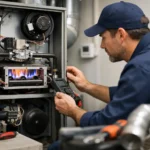
The exact service steps depend on your furnace type, age, and condition. In general, a professional visit may include checking the burner operation and ignition sequence, inspecting the heat exchanger, testing safety controls, examining the blower and electrical connections, confirming thermostat operation, and checking airflow. For a high-efficiency furnace, the technician may also inspect condensate drainage and venting components.
Technicians can identify parts that are wearing out before they fail completely, such as igniters, flame sensors, pressure switches, capacitors, and blower components. Not every worn component needs immediate replacement. The right decision depends on the part’s condition, the furnace’s age, repair cost, and the risk of a mid-season breakdown. A trustworthy technician should explain the options instead of pressuring you into work you do not need.
For gas equipment in the Greater Toronto Area, homeowners should look for qualified, properly certified professionals. Airmaxx Heating & Air Conditioning provides furnace service with licensed technicians and a practical focus on safe operation, dependable repairs, and year-round comfort.
Warning Signs That Maintenance Cannot Wait
Annual service is a smart preventive step, but certain symptoms call for a prompt service visit. Do not wait until your scheduled appointment if your furnace is showing signs of unsafe or unreliable operation.
Call for professional help if you notice any of the following:
- The furnace runs but blows cool air or does not maintain the set temperature.
- You smell gas, burning insulation, or persistent unusual odors.
- The system starts and stops repeatedly, known as short cycling.
- You hear loud rattling, grinding, banging, or squealing sounds.
- Your energy bills rise unexpectedly without a clear change in weather or usage.
- The pilot light, if your furnace has one, is yellow instead of a steady blue flame.
- A carbon monoxide alarm activates or household members experience possible exposure symptoms.
A furnace that is cycling frequently may have a simple issue, such as a dirty filter or thermostat problem, but it can also indicate restricted airflow, a dirty flame sensor, overheating, or a control issue. The cause matters, so avoid repeatedly resetting the system and hoping it resolves itself.
When to Schedule Furnace Service
Early fall is usually the best time to schedule annual service because technicians can inspect the furnace before it becomes essential every day. That timing also gives you time to plan a repair if one is needed, rather than making a rushed decision during an emergency.
Still, maintenance is useful whenever it is overdue. If winter has already arrived and your furnace is operating normally, it is not too late to have it checked. The important thing is not to wait until the equipment fails, particularly if the furnace is more than 10 years old or has a history of repairs.
A maintained furnace cannot guarantee that a part will never fail. It can, however, reduce preventable problems, improve efficiency, and give you clearer information about the condition of the equipment heating your home or business. Book service before the next cold stretch, and you can face the season with fewer surprises and more confidence in your comfort.