Your air conditioner fails on the first hot day of the season, the house is getting warmer by the hour, and the question becomes urgent: should you repair or replace air conditioner equipment? The right answer is not always the lowest upfront price. A timely repair can restore comfort for years, while replacing an aging, inefficient unit can prevent repeat breakdowns and reduce long-term operating costs.
For homeowners, landlords, and small business owners, the best decision starts with a professional diagnosis. The issue may be a worn capacitor, clogged drain, failed contactor, refrigerant leak, compressor problem, or electrical concern. Those repairs have very different costs, safety implications, and expected results.
When Air Conditioner Repair Makes Sense
Repair is often the practical choice when the system is relatively new, has been maintained, and has a clear, isolated problem. If your air conditioner is under 10 years old and this is its first significant repair, replacing the faulty part may be a smart investment.
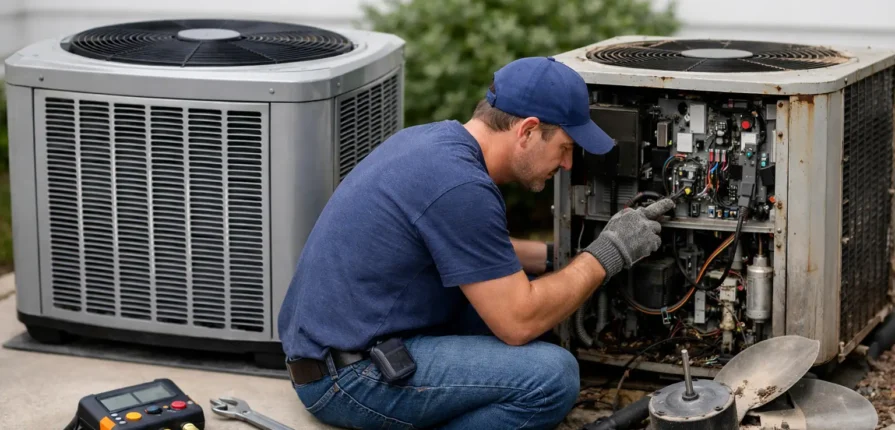
A repair can also make sense when the equipment is still cooling evenly, your energy bills have remained stable, and the technician confirms that the compressor, coil, and refrigerant system are in good condition. Common repairs such as replacing a capacitor, contactor, thermostat, fan motor, or drainage component are usually far less costly than installing a new system.
Do not ignore smaller problems simply because the unit still runs. Warm air from vents, weak airflow, ice on refrigerant lines, water near the indoor unit, unusual noises, or frequent cycling can worsen quickly. Addressing the issue early may protect more expensive components and help you avoid an emergency breakdown during peak summer weather.
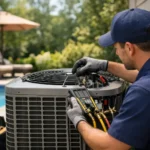
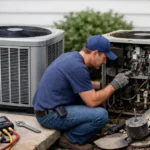
A qualified HVAC technician should inspect the full system, not just replace a part and leave. Proper diagnosis includes checking electrical connections, airflow, refrigerant performance, indoor and outdoor coils, condensate drainage, and thermostat operation. This helps ensure the repair solves the cause of the problem rather than temporarily masking it.
Signs It May Be Time to Replace Your Air Conditioner
Even a well-maintained air conditioner eventually reaches a point where repairs become harder to justify. Most central air conditioning systems have an expected service life of roughly 12 to 15 years, although installation quality, maintenance history, usage, and local weather all affect longevity.
Age alone does not require replacement. However, an older system with recurring failures, declining comfort, or rising utility bills deserves a closer financial review. Consider replacement when you are experiencing several of these warning signs:
- Your system is more than 12 years old and needs a major repair.
- You have needed multiple service calls in the last two cooling seasons.
- The compressor or evaporator coil has failed or is failing.
- Your home has hot and cold rooms, weak airflow, or persistent humidity problems.
- Energy bills have increased without a meaningful change in how you use your system.
- The unit uses R-22 refrigerant, which is no longer produced for new equipment and can be costly to source for repairs.
A new system may provide more consistent cooling, improved humidity control, quieter operation, and better efficiency. But replacement should be based on your actual home, system condition, and budget, not on a one-size-fits-all recommendation.
Compare the Repair Cost to the System’s Remaining Life
One rule homeowners often hear is to replace the unit if a repair costs more than 50% of a new system. That can be a useful starting point, but it is not a final answer. A costly repair on a six-year-old system may still be worthwhile. The same repair on a 15-year-old unit with a history of breakdowns may only delay a larger expense.
Ask three practical questions before approving a major repair. First, how long should the repaired system reasonably last? Second, what other components are showing wear? Third, how much would a replacement improve energy use, comfort, and reliability?
For example, replacing a failed capacitor on an older unit may buy several more seasons at a modest cost. Replacing a compressor, on the other hand, can be a major expense. If the unit is already near the end of its expected life, has an aging coil, or uses outdated refrigerant, putting that money toward a new installation may offer better value.
Your technician should provide clear repair findings and explain the available options. You deserve to know what failed, why it failed, what the repair includes, and whether there is a realistic risk of another costly issue soon after.
Efficiency Matters, but Comfort Matters Too
Newer air conditioners are generally more efficient than older units, but efficiency ratings should not be the only reason to replace working equipment. The real question is whether your current system is delivering reliable comfort at a reasonable operating cost.
If your home feels sticky even when the thermostat is set correctly, the issue may involve more than the outdoor air conditioner. Oversized equipment can cool the air too quickly without removing enough moisture. Undersized equipment may run continuously and still struggle to keep up. Leaky ducts, poor insulation, blocked returns, dirty coils, and thermostat placement can also affect comfort.
That is why replacement planning should include a load calculation and an evaluation of the existing ductwork. Installing the wrong size system can waste energy, shorten equipment life, and leave you with the same comfort complaints. Proper installation is just as important as the brand or efficiency rating printed on the equipment.
For light commercial spaces, sizing and airflow are especially important. A small office, retail area, or rental property may have changing occupancy, equipment heat, sun exposure, and ventilation needs. A professional assessment can prevent downtime and help protect employees, tenants, customers, and inventory from excessive heat.
Don’t Overlook Maintenance Before Making the Call
Sometimes an air conditioner appears to be failing when it needs basic maintenance. A dirty filter can restrict airflow, cause coil freezing, and make the system work harder. A clogged condensate drain can lead to water damage or system shutdown. Dirty outdoor coils can reduce heat transfer and force longer run times.
Before deciding on a major repair or replacement, make sure the filter is clean, supply and return vents are open, the outdoor unit is clear of leaves and debris, and the thermostat has fresh batteries if applicable. Do not attempt electrical or refrigerant repairs yourself. Air conditioning systems contain high-voltage components and pressurized refrigerant, and improper work can create safety hazards or further equipment damage.
Annual professional maintenance is one of the best ways to extend system life. A seasonal tune-up gives a technician the opportunity to identify worn parts, clean critical components, test performance, and correct small issues before they become a no-cooling emergency.
How to Make the Right Repair or Replace Decision
The clearest path is a written diagnosis paired with honest options. Request the cost of the immediate repair, the condition of major components, the expected remaining life of the equipment, and an estimate for replacement if the repair is significant. If replacement is recommended, ask about equipment sizing, warranty coverage, installation details, efficiency options, and financing availability.
For Greater Toronto Area property owners, Airmaxx Heating & Air Conditioning can assess the system condition, explain the practical trade-offs, and complete repairs or properly sized replacements with licensed, code-compliant workmanship. Emergency service is especially valuable when a failed unit is affecting young children, seniors, tenants, customers, or temperature-sensitive spaces.
A Decision That Protects Your Comfort
A repair is the right choice when it restores dependable cooling without putting too much money into a system near the end of its life. Replacement is the better choice when repeated repairs, high operating costs, outdated refrigerant, or poor comfort show that the equipment is no longer serving the property well.
If you are unsure, do not wait for a minor symptom to become a mid-summer failure. Schedule a professional evaluation while you still have time to compare your options, plan your budget, and choose the solution that keeps your home or business comfortably cool.