Hot water problems usually get your attention fast – especially when the shower turns cold halfway through the morning rush or a leaking tank starts soaking the utility room. If you are weighing a tankless vs tank water heater decision, the right choice depends on more than just energy savings. Your home size, daily water use, gas line capacity, venting setup, and budget all matter.
For many homeowners, the question starts with one simple goal: reliable hot water without overpaying for installation or monthly utility bills. That is exactly where this comparison should stay – practical, realistic, and focused on what works in an actual home, not just what sounds better on paper.
Tankless vs tank water heater: the basic difference
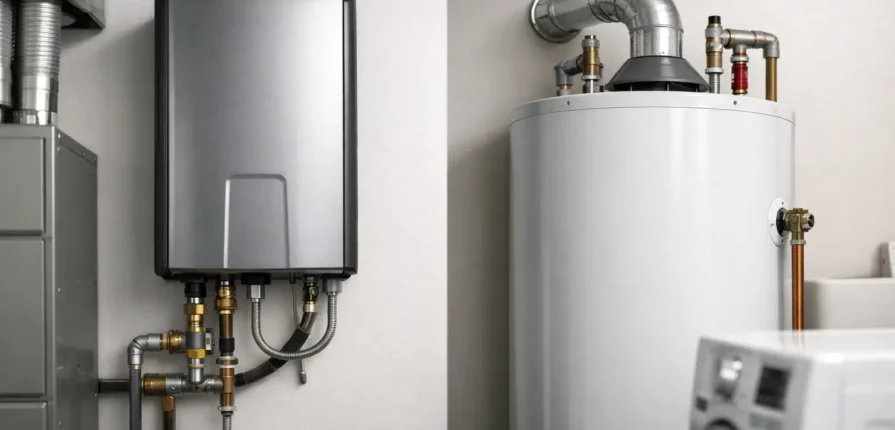
A traditional tank water heater stores and heats a set amount of water, usually 40 to 75 gallons. It keeps that water hot around the clock so it is ready when you need it. That standby heating is familiar and dependable, but it also uses energy even when no one is running hot water.
A tankless water heater works differently. Instead of storing hot water, it heats water as it flows through the unit. When a tap opens, the system fires up and heats water on demand. This can reduce standby energy loss, and it also means you are not limited by the size of a storage tank in the same way.
That sounds like an easy win for tankless, but the real answer is not that simple. Tankless units have higher upfront costs and may require upgrades to venting, gas piping, or electrical service. In some homes, that extra installation work changes the math.
When a tank water heater makes more sense
A standard tank water heater is still a smart option for many households. If your existing setup already supports a straightforward tank replacement, installation is often faster, less invasive, and more affordable. For homeowners dealing with a sudden failure, that matters.
Tank systems are also a good fit when hot water demand is predictable and moderate. A family with normal morning and evening usage may do perfectly well with a properly sized tank. If the unit is installed correctly and maintained, it can deliver dependable performance for years.
There is also the issue of budget. If your current water heater has failed and you need a replacement now, a tank model usually has the lower initial cost. For many families and landlords, keeping the project manageable today is more important than chasing long-term savings that may take years to recover.
Tank heaters are not perfect. Once the stored hot water is used up, recovery time becomes the issue. If several people shower back-to-back, or if laundry and dishwashing happen at the same time, you may run short.
When a tankless water heater is worth it
Tankless systems appeal to homeowners who want higher efficiency and a more compact setup. Because they heat water only when needed, they can reduce wasted energy. In homes with high utility costs or consistent hot water use, that can be a meaningful advantage over time.
They are also attractive when space is tight. A wall-mounted tankless unit frees up room compared with a bulky storage tank, which can help in smaller basements, utility closets, or mechanical rooms.
The biggest selling point for many homeowners is continuous hot water. A properly sized tankless system can keep hot water flowing without the same stored-volume limit of a tank. That is helpful for larger families, homes with oversized tubs, or households where multiple fixtures are often used at once.
Still, the phrase properly sized is doing a lot of work there. Tankless systems are not one-size-fits-all. If the unit is undersized, you may notice reduced performance when more than one demand happens at the same time. That is why installation quality and load calculation matter so much.
Cost is not just the price of the unit
This is where many water heater decisions go sideways. Homeowners compare equipment pricing without looking at the full installation scope.
A tank replacement is often more predictable if the home already has a similar unit in place. In contrast, switching from tank to tankless may involve new venting materials, condensate drainage, gas line upsizing, electrical changes, and code-related updates. Depending on the property, those additions can be modest or significant.
That does not mean tankless is overpriced. It means the total project cost depends on the home. In a house already set up for it, the jump may be easier to justify. In an older property with limited gas capacity or venting constraints, the upgrade can cost more than expected.
The better question is not Which unit is cheaper? It is Which option gives you the best value for your home, usage, and timeline?
Energy efficiency and utility savings
Tankless water heaters are generally more efficient than standard tank models because they avoid standby heat loss. That part is true. But actual savings depend on how much hot water your household uses and how efficient your current or replacement tank model is.
If your home uses hot water steadily throughout the day, a tankless unit may deliver noticeable savings over time. If usage is lighter or more concentrated, the difference may be smaller than many homeowners expect.
High-efficiency tank water heaters have also improved. Not every tank system is outdated or wasteful. A properly selected modern tank can still offer solid efficiency, especially when matched to the household’s needs.
This is one of those areas where sales claims can sound stronger than real-world results. Efficiency matters, but it should be weighed alongside installation cost, maintenance needs, and expected length of ownership.
Lifespan and maintenance
Tankless units often last longer than tank water heaters, especially when maintained properly. That longer service life is one of their strongest long-term advantages. But they are not maintenance-free.
Tankless systems usually need regular descaling, especially in areas with hard water. Mineral buildup can affect performance and efficiency if service is ignored. Tank water heaters also need maintenance, including inspection, flushing, and checking the anode rod, but many homeowners overlook it until there is a problem.
The lesson here is straightforward: either system can perform well if it is installed correctly and serviced on schedule. Either system can also become expensive if maintenance is ignored.
Performance in busy households
For smaller households, either type can work well when sized correctly. The difference becomes more noticeable in homes with heavy simultaneous demand.
A tank water heater gives you a reservoir of ready hot water, but once that reserve is gone, you wait for recovery. A tankless system avoids that specific issue, but it has a maximum flow rate. If the unit cannot keep up with multiple showers, appliance use, and sink demand at the same time, water temperature may fluctuate.
That is why a tankless upgrade should never be treated like a simple product swap. The unit needs to be sized around fixture count, incoming water temperature, and real household habits. In colder climates, incoming water can be much colder in winter, which affects output.
Installation quality matters more than the label
A poorly installed water heater causes problems no matter which type you choose. Venting errors, incorrect gas sizing, bad drainage, poor placement, and skipped code requirements can lead to reduced efficiency, safety concerns, and early failure.
That is why this decision should be based on the house, not just the brochure. Licensed, experienced technicians can assess the actual conditions, explain whether a tankless conversion is practical, and recommend a system that matches your usage instead of overselling capacity you do not need.
For homeowners who want dependable hot water, safe installation, and clear guidance, that professional evaluation is often the most valuable part of the job. Companies like Airmaxx Heating & Air Conditioning handle these details every day, which helps homeowners avoid expensive surprises.
So which one should you choose?
If you want the lower upfront cost, a familiar setup, and a faster replacement path, a tank water heater is often the better fit. If you plan to stay in the home, want better efficiency, need to save space, and your house can support the installation requirements, a tankless system may be worth the investment.
There is no universal winner in the tankless vs tank water heater debate. The right choice depends on your home, your budget, and how you actually use hot water.
Before replacing a failing unit, it helps to think beyond the sticker price. The best water heater is the one that delivers safe, reliable performance without forcing you into avoidable upgrades or recurring hot water frustration. A careful installation today usually saves more trouble than a rushed decision ever will.