You notice it first in the late afternoon. The thermostat says the AC is on, the vents are blowing, and yet the house still feels warm and sticky. If your ac not cooling house problem is getting worse by the hour, the cause could be something simple, or it could be an issue that needs professional repair before it turns into a full system failure.
The good news is that not every cooling problem means you need a new unit. In many cases, the issue comes down to airflow, thermostat settings, a dirty filter, frozen coils, or a condenser problem outside. The key is knowing what you can safely check yourself and when it makes more sense to bring in a licensed HVAC technician.
Why is the AC not cooling the house?
An air conditioner can run without actually removing enough heat from the home. That is what makes this problem so frustrating. Homeowners often hear the system operating and assume it is doing its job, but cooling depends on several components working together at the same time.
If one part of that process is restricted or failing, the result is weak cooling, uneven temperatures, or air that feels barely cooler than the room itself. Sometimes the system is too dirty to perform properly. Sometimes the thermostat is not telling the equipment what to do. And sometimes the AC is working hard but is undersized, aging, or dealing with a refrigerant or electrical fault.
Start with the easiest checks
Before you assume the worst, take a close look at the basics. A surprising number of no-cooling or low-cooling calls come down to settings, airflow restrictions, or maintenance items that have been overlooked.
Check the thermostat
Make sure the thermostat is set to cool and not fan only. Set the temperature at least a few degrees below the current room temperature and listen for the system to respond. If the screen is blank, replace the batteries if your model uses them.
Also check the fan setting. When the fan is set to on instead of auto, air may keep circulating even when the AC is not actively cooling. That can make it seem like the system is running normally when it is not.
Look at the air filter
A clogged air filter is one of the most common reasons an AC struggles to cool. When airflow is restricted, the system cannot move enough air across the evaporator coil. That can reduce cooling performance and, in some cases, cause the coil to freeze.
If the filter looks dirty, replace it. Then give the system some time to recover. If you have not changed the filter in a while, this is the first place to start.
Check vents and registers
Walk through the house and make sure supply vents are open and not blocked by furniture, rugs, or drapes. Closed vents can create airflow problems and put extra strain on the system. Return vents matter too. If returns are blocked, the AC may not be able to pull enough air back through the system.
This is especially important in homes where one or two rooms feel comfortable but the rest of the house does not. The issue may be less about the equipment itself and more about how air is moving through the home.
When airflow is the real problem
If your AC is running but not keeping up, poor airflow is often the reason. You may feel some air coming from the vents, but not enough to cool the rooms properly.
Dirty evaporator coil
Inside the system, the evaporator coil absorbs heat from indoor air. If that coil is coated in dust or debris, heat transfer drops and cooling performance suffers. This is not usually a DIY cleaning job, since the coil can be difficult to access and easy to damage.
Frozen coil
A frozen evaporator coil can happen because of dirty filters, blocked airflow, low refrigerant, or blower problems. Signs include weak airflow, ice on the refrigerant line, or water around the indoor unit after the ice begins to melt.
If you suspect a frozen coil, turn the system off at the thermostat and switch the fan to on to help thaw it. Do not keep running the AC in cooling mode. Once it has thawed, a technician should inspect the cause, because freezing is usually a symptom, not the root problem.
Blower motor issues
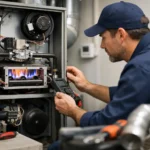
If the blower motor is failing, the AC may cool poorly even though the outdoor unit appears to be running. Some homes will have very low airflow at the vents, while others may notice the system starts and stops irregularly. Blower problems can involve the motor, capacitor, wheel, or control board, and they should be diagnosed professionally.
Problems outside can stop cooling inside
The outdoor condenser plays a major role in releasing heat from your home. If it cannot do that effectively, indoor comfort drops fast.
Dirty condenser coil
Leaves, dirt, cottonwood, grass clippings, and general outdoor buildup can reduce airflow through the condenser coil. When the coil is dirty, the system has a harder time releasing heat, which makes it less efficient and less effective.
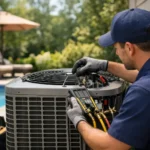
You can check for obvious debris around the outdoor unit and clear vegetation that is crowding it. Leave deeper coil cleaning to a professional, especially if the fins are bent or the unit is heavily soiled.
Condenser fan not working
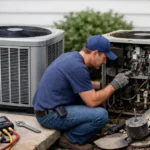
If the outdoor unit is humming but the fan is not spinning, the system may not be able to cool properly at all. This can point to a bad capacitor, motor issue, or electrical fault. Turn the system off and schedule service. Running it in this condition can lead to bigger damage.
Tripped breaker or disconnect issue
Sometimes part of the system loses power while another part still operates. For example, the indoor blower may run while the outdoor condenser does not. Check your electrical panel for a tripped breaker, but if it trips again, do not keep resetting it. That usually means there is an underlying electrical problem that needs attention.
AC not cooling house evenly
Not every cooling complaint means the whole unit has failed. In many homes, the problem is uneven cooling. One floor may be comfortable while another stays hot. Certain rooms may always feel warmer, especially in older homes, additions, or spaces with a lot of sun exposure.
This can happen because of leaky ductwork, poor return air design, insulation gaps, thermostat placement, or an aging system that is losing capacity. It can also be a sizing issue. A unit that is too small may run constantly and never fully catch up during peak heat.
On the other hand, a unit that is too large can create its own comfort problems by cooling too quickly without removing enough humidity. That is why it helps to have the system evaluated as a whole rather than guessing based on temperature alone.
When refrigerant may be the issue
Low refrigerant is a common cause of weak cooling, but it is not something that just gets used up like fuel. If refrigerant is low, there is usually a leak. Signs may include long run times, poor cooling, ice on the lines, or hissing sounds near the equipment.
This is not a do-it-yourself fix. Refrigerant problems require licensed handling, leak detection, proper repair, and correct charging based on manufacturer specifications. Simply topping it off without fixing the leak is a temporary measure at best and can lead to repeat breakdowns.
Repair or replace? It depends
If the AC is not cooling the house and the unit is older, many homeowners immediately wonder whether repair still makes sense. The answer depends on the age of the system, the type of failure, the repair cost, and how reliably the unit has been performing.
A relatively new system with a capacitor, blower, thermostat, or maintenance-related issue is often worth repairing. An older system with recurring refrigerant leaks, compressor problems, or major electrical faults may be a better candidate for replacement, especially if energy bills have been climbing and comfort has been inconsistent.
This is where a professional inspection matters. A dependable HVAC company should explain what failed, what the repair involves, and whether replacement would save you money and stress over the long run.
When to call a professional for AC not cooling house issues
If you have checked the thermostat, changed the filter, opened the vents, and confirmed the breaker is on, but the home still is not cooling properly, it is time for a service call. The same is true if you notice ice, water leaks, burning smells, buzzing, short cycling, or an outdoor unit that is not operating correctly.
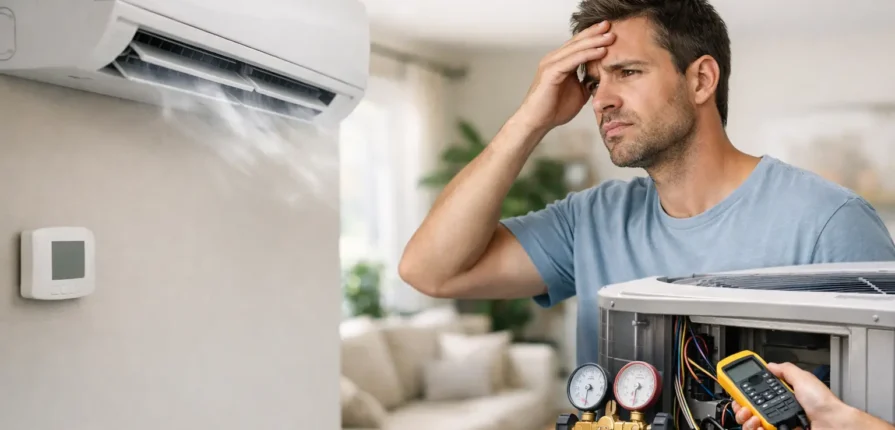
For homeowners and property managers, fast diagnosis matters. Letting an AC struggle through hot weather can increase wear on major components and raise utility costs while comfort keeps slipping. A licensed technician can test airflow, refrigerant pressure, electrical components, coils, blower performance, and system controls to pinpoint the issue accurately.
Companies like Airmaxx Heating & Air Conditioning handle these calls every day for homes and light commercial spaces that need reliable cooling restored without guesswork. When comfort, safety, and equipment performance all matter, expert service is the safer route.
Routine maintenance also helps prevent many of these problems before they interrupt your day. Seasonal inspections, coil cleaning, filter checks, and early part replacement can make a big difference in system reliability during the hottest months.
If your house is getting warmer while the AC keeps running, do not wait for a complete breakdown. A few quick checks can rule out the simple stuff, and the right repair can often bring your comfort back faster than you think.