You set the thermostat to 72, but the house stalls at 67. Or the AC runs for hours and never quite gets there. When a thermostat not reaching set temperature becomes a pattern, the issue is not always the thermostat itself. In many homes and small commercial spaces, the real problem is somewhere between the control, the equipment, and the airflow.
That matters because the wrong guess can cost you time, comfort, and money. Replacing a thermostat when the actual issue is a clogged filter, low refrigerant, a short-cycling furnace, or poor duct airflow does not solve much. A careful check usually points you in the right direction quickly.
Why a thermostat is not reaching set temperature
A thermostat only tells your HVAC system when to turn on and off. If the room temperature never reaches the number on the screen, one of two things is usually happening. Either the thermostat is reading the space incorrectly, or the heating or cooling system is not delivering enough output to match the demand.
Sometimes the cause is simple. Dead batteries, incorrect settings, a dirty air filter, or blocked vents can hold a system back. Other times, the issue is mechanical. A failing blower motor, dirty evaporator coil, refrigerant problem, damaged ductwork, weak igniter, or undersized equipment can all show up as the same complaint: the thermostat says one thing, but the room feels another.
Weather also plays a role. During a heat wave or a deep winter cold snap, even a properly working system may take longer to reach the target temperature. That does not always mean something is broken. The key is noticing whether this happens only during extreme conditions or during normal weather too.
Start with the thermostat itself
If your thermostat is not reaching set temperature, start with the control on the wall before assuming the furnace or AC has failed. Check that it is set to the correct mode – heat or cool – and that the fan setting is where you want it. A fan set to ON instead of AUTO can make the home feel less consistent because air keeps circulating even when the system is not actively heating or cooling.
If the thermostat uses batteries, replace them. Weak batteries can cause erratic readings or intermittent control issues. If you have a programmable or smart thermostat, review the schedule and hold settings. It is common for someone to think the system is not responding when the thermostat is actually following a programmed setback.
Placement matters too. If the thermostat is installed near a sunny window, exterior door, kitchen, fireplace, or supply vent, it may read hotter or colder than the rest of the building. In that case, the equipment may shut off too early or run longer than needed. The thermostat might be working fine, but the location is giving it bad information.
Airflow problems are one of the most common causes
Restricted airflow is one of the first things we check on service calls because it affects both comfort and equipment performance. If air cannot move properly through the system, the thermostat may keep calling for heating or cooling without ever reaching the set point.
A dirty air filter is the simplest example. When the filter is packed with dust, airflow drops, and the system struggles to condition the space. In heating mode, that can lead to overheating and short cycling. In cooling mode, it can contribute to coil freezing and weak air delivery.
Blocked return grilles or closed supply vents create a similar problem. Many homeowners close vents in unused rooms thinking it will save energy, but that can throw off airflow and static pressure across the system. The result is often uneven temperatures and longer run times.
Duct issues are another possibility. Leaky, disconnected, crushed, or poorly designed ducts can dump conditioned air into unoccupied spaces instead of the rooms that need it. If one floor is always comfortable and another never gets there, duct performance should be part of the conversation.
Your HVAC equipment may be running, but not properly
A system that turns on is not necessarily a system that is working correctly. Furnaces, heat pumps, and air conditioners can all operate in a weakened state for quite a while before they stop completely.
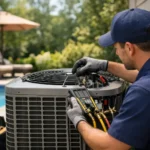
In cooling season, low refrigerant, a dirty outdoor coil, a failing capacitor, or a weak compressor can reduce cooling capacity. The thermostat keeps calling, the equipment keeps running, and the indoor temperature barely moves. If you notice warm air from the vents, ice on refrigerant lines, or unusually long cooling cycles, that points to an AC issue rather than a thermostat issue.
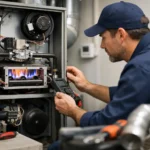
In heating season, a dirty flame sensor, ignition problem, restricted venting, blower issue, or limit switch problem may cause the furnace to shut down early. It may fire up, run briefly, and stop before the home reaches temperature. Heat pumps can also struggle if the outdoor unit is not defrosting correctly or if auxiliary heat is not coming on when needed.
There is also the sizing question. If equipment is too small for the space, or if the home has changed over time with additions, insulation gaps, or air leakage, reaching the set temperature may be unrealistic during peak weather. On the other hand, oversized equipment has its own problems, often cycling too quickly to maintain even comfort.
When the problem is really the house
Not every comfort issue starts at the thermostat or the equipment. Sometimes the HVAC system is doing its job, but the building is losing heat or gaining heat faster than it should.
Drafty windows, poor attic insulation, recessed lighting leaks, damaged door seals, and uninsulated walls can all make it harder to maintain temperature. In summer, direct sun through large windows can overwhelm certain rooms. In winter, cold air leakage can make the thermostat seem inaccurate when the real issue is heat loss.
This is why some homes have a room that is always too hot or too cold no matter what the thermostat says. The thermostat may be averaging conditions in one hallway while a bedroom over the garage tells a very different story. If the issue is isolated to one zone or area, the building envelope and duct balance deserve attention.
What you can check safely before calling for service
There are a few practical checks worth doing before scheduling a repair. Make sure the thermostat has fresh batteries if applicable, verify the setting and schedule, and compare the displayed room temperature with a separate thermometer nearby. That can help confirm whether the thermostat is reading accurately.
Next, inspect the air filter. If it is dirty, replace it with the correct size and rating. Check that supply vents and return grilles are open and not blocked by furniture, rugs, or curtains. If you have central AC, look at the outdoor unit and clear away debris, leaves, or overgrown plants that may be restricting airflow.
Also take note of system behavior. Is the unit running constantly, short cycling, making unusual noises, or blowing weak air? Is the issue affecting the whole building or just one area? Those details help a technician diagnose the problem faster and more accurately.
What you should not do is open panels, handle wiring, or attempt refrigerant-related repairs. HVAC systems involve electrical components, combustion safety, and pressurized systems. A quick guess can turn a manageable repair into a larger one.
When to call a licensed HVAC technician
If basic checks do not fix the issue, the next step is professional diagnosis. A licensed technician can test thermostat operation, verify voltage and control signals, inspect sensors, measure airflow, check refrigerant performance, evaluate furnace safety controls, and confirm whether the equipment is sized and operating correctly.
This is especially important if the problem comes with other warning signs such as burning smells, ice buildup, water leaks, tripped breakers, uneven temperatures throughout the property, or a system that runs nonstop. In those cases, delaying service can increase wear on the equipment and push up energy costs.
For homeowners and property managers, the value of a proper diagnosis is simple. You get a clear answer instead of swapping parts and hoping for the best. Companies like Airmaxx Heating & Air Conditioning handle these issues every season, and the goal is always the same – restore comfort safely, efficiently, and without unnecessary guesswork.
How to reduce the chances of it happening again
Most recurring thermostat complaints trace back to maintenance that was delayed or skipped. Regular filter changes, seasonal tune-ups, coil cleaning, airflow checks, and thermostat calibration can catch minor issues before they affect comfort.
It also helps to be realistic about set points during extreme weather. A system may maintain comfort well but still need extra time when outdoor temperatures are far outside the norm. If the home used to keep up and no longer does, that is a stronger sign something has changed.
If your thermostat consistently misses the target, treat it as an early warning, not a minor annoyance. Comfort problems rarely stay small for long. A timely service visit often costs less than waiting for a full breakdown on the hottest or coldest day of the year.
If the temperature on the screen and the temperature in the room are not lining up, trust what your home is telling you. A good thermostat should support comfort, not leave you guessing.