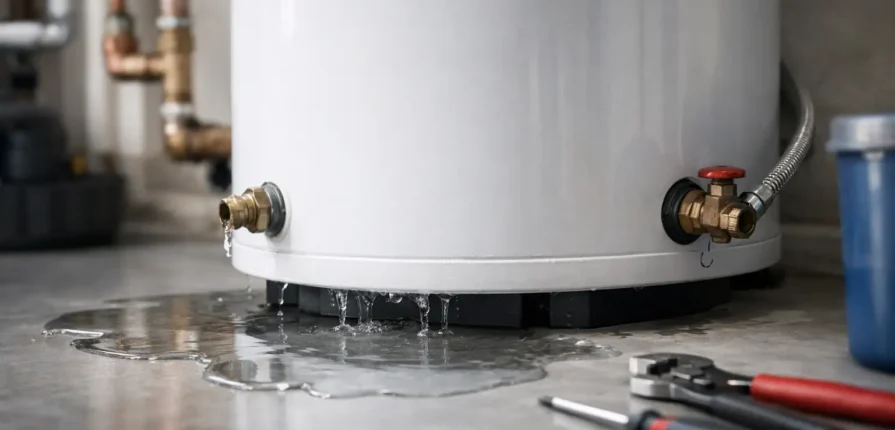
You walk into the basement, utility room, or mechanical closet and see a puddle under the tank. If your water heater is leaking from bottom, the problem may be minor, or it may mean the tank itself is failing. The key is to act quickly, protect the area around it, and avoid waiting for a small leak to turn into water damage, mold, or a complete loss of hot water.
A leak at the bottom of a water heater does not always mean the bottom of the tank is cracked. Water can travel down from a fitting, valve, or pipe above and collect underneath, which makes the source look worse than it is. That said, if the inner tank has corroded through, replacement is usually the only real fix.
Why a water heater leaking from bottom happens
Most homeowners assume the tank is done the moment they see water on the floor. Sometimes that is true. Sometimes it is not. A proper inspection matters because the solution can range from tightening a connection to replacing the whole unit.
One common cause is the drain valve near the bottom of the tank. If it is loose, worn, or not fully closed after maintenance, it can drip slowly and leave water under the heater. This is a smaller repair in many cases, but it should still be handled properly to avoid damaging the valve or causing a larger leak.
Another possibility is the temperature and pressure relief valve. This safety valve is designed to discharge water if pressure or temperature gets too high. If it is leaking, the issue may not be the valve alone. High pressure, overheating, or a faulty expansion setup can all contribute. Replacing the valve without addressing the underlying cause may only provide a temporary fix.
Condensation can also confuse the situation, especially in humid conditions or when there is a big temperature difference between the tank and surrounding air. In that case, the water may not be from a true plumbing leak. The amount is usually lighter and more intermittent, but it still needs to be confirmed.
The most serious cause is tank corrosion. Over time, sediment settles at the bottom of the tank, especially in areas with hard water. That sediment traps heat, stresses the metal, and accelerates wear. Once the inner tank lining fails and rust eats through, water starts leaking from the base. At that point, repair is generally not cost-effective or reliable.
What to do first when you find water under the tank
Start by shutting off the power or fuel source. For an electric water heater, turn it off at the breaker. For a gas unit, set the gas control to the off position and, if needed, shut off the gas supply according to manufacturer and safety guidance. This reduces the risk of damage and makes the situation safer while you assess it.
Next, shut off the cold water supply to the heater. There is usually a valve on the cold inlet pipe above the tank. Stopping the incoming water can limit the leak and prevent the tank from continuing to fill if there is a serious failure.
Then dry the area as much as possible and inspect carefully. Wipe the pipes, fittings, and body of the heater so you can tell where fresh water is appearing. If the leak starts higher up and runs down the jacket, the bottom puddle may be misleading.
If you see active leaking from the tank body itself or rusted-through metal near the bottom seam, do not try to patch it. Tank leaks are not dependable repair situations. The safest next step is professional replacement.
How to tell if it is repairable or not
A leaking water heater can sometimes be repaired if the source is external. This includes a loose pipe connection, a leaking drain valve, or in some cases a failing relief valve. Those parts can often be replaced or corrected if the tank is otherwise in good condition.
Age matters here. If the unit is already 8 to 12 years old and starting to leak, investing in repairs may not make much sense. Even if one component is fixed, another issue may follow soon after. For many homeowners and landlords, replacement is the more practical choice once an older unit starts showing signs of corrosion or repeated leaking.
Look for rust-colored water, visible corrosion around fittings, signs of previous leakage, or reduced hot water performance. These all point to a unit that may be nearing the end of its service life. If your utility bills have also been creeping up, the heater may be working harder than it should.
In a light commercial setting, the decision is even more time-sensitive. Restaurants, small offices, salons, and rental properties often cannot afford downtime. A fast diagnosis helps you decide whether a same-day repair is realistic or if replacement will prevent repeat disruptions.
Signs the leak is an emergency
Some water heater leaks can wait a few hours for a scheduled visit. Others should be treated as urgent. If water is spreading toward finished flooring, electrical components, or nearby appliances, quick action matters. The same goes for leaking combined with banging noises, no hot water, a sulfur smell, or visible rust at the tank base.
For gas water heaters, any concern about gas odor should be treated seriously. Leave the area and follow proper gas safety procedures before arranging service. Safety comes first.
A slow drip can still become an expensive problem if it is ignored overnight or over a weekend. Water damage, drywall saturation, flooring issues, and mold growth often cost far more than the plumbing or HVAC repair itself.
Can you keep using the water heater?
Usually, no. If your water heater is leaking from bottom, continued use can make the problem worse. Heating cycles increase pressure and stress inside the tank. If the leak is coming from corrosion or a failing seam, the unit can let go suddenly instead of continuing to drip slowly.
If the source turns out to be minor, a technician can confirm that and make the repair. Until then, it is safer to keep the unit off and the water supply isolated. This is especially true in homes with finished basements or in properties where even a few gallons of water can damage flooring, storage, or equipment.
Repair or replace? It depends on the source and the age
There is no one-size-fits-all answer. A newer unit with a bad drain valve is very different from a 12-year-old tank leaking through the bottom seam. The right choice depends on the leak source, unit age, warranty status, overall condition, and how urgently you need reliable hot water restored.
Repair tends to make sense when the tank itself is sound and the leak is isolated to a serviceable component. Replacement makes more sense when the tank is corroded, the unit is old, efficiency is poor, or you have already spent money on recent repairs.
Homeowners also need to think beyond today’s puddle. A properly installed replacement can improve reliability, energy performance, and hot water recovery. If your current tank has struggled to keep up, this may be the right time to size the new system correctly rather than just replacing like for like.
How to prevent another bottom leak
Regular maintenance goes a long way. Flushing sediment from the tank helps reduce buildup at the bottom, where many long-term problems begin. Checking the anode rod, testing the relief valve, and inspecting fittings for early signs of wear can also extend equipment life.
Installation quality matters too. Poor venting, incorrect pressure management, bad pipe connections, or code issues can shorten the life of a water heater and create avoidable leak risks. This is one reason many property owners prefer licensed, experienced technicians rather than treating installation like a basic swap.
If your system is older, annual inspection is a smart move. Catching rust, pressure issues, or valve problems early can help you plan replacement before an emergency happens. That is easier on your schedule and often easier on your budget.
For homeowners and property managers who need dependable hot water without the guesswork, working with a qualified local contractor matters. Airmaxx handles water heater diagnosis, repair, and replacement with a focus on safe workmanship, code compliance, and fast response when leaks cannot wait.
When you find water under a tank, the best move is not to hope it stops on its own. Shut it down, protect the area, and get it checked before a manageable repair becomes a much bigger mess.