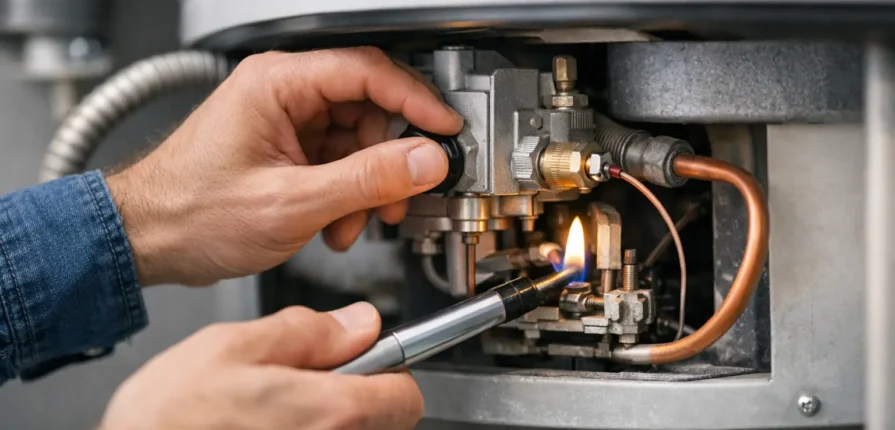
A cold shower is often the first sign that your gas water heater’s pilot light has gone out. Before you try to figure out how to relight water heater equipment, take a moment to confirm what type of unit you have and whether it is safe to restart. A pilot that will not stay lit can point to a simple issue, but it can also signal a gas supply, venting, or combustion problem that needs professional attention.
First, Make Sure Your Water Heater Has a Pilot Light
Not every water heater can be relit manually. Older conventional gas tank water heaters commonly use a standing pilot light, which is a small flame that remains on to ignite the burner when the water needs heating. These models typically have a gas control valve near the bottom of the tank with settings such as OFF, PILOT, and ON.
Newer gas models may use electronic ignition or a power vent system instead. Electric water heaters do not have pilots at all. If your water heater has a digital display, a power cord, a reset button, or no visible pilot control, do not attempt the instructions below. Check the manufacturer’s label and operating guide, or arrange for a qualified technician to inspect the unit.
Safety Checks Before You Relight a Water Heater
Gas appliances deserve caution. Do not attempt to relight the pilot if you smell gas around the water heater, hear hissing near a gas line, or notice a strong sulfur or rotten-egg odor. Leave the area immediately, avoid switches, flames, and electrical devices, and contact your gas utility or emergency service from a safe location.
You should also stop and call for service if the area around the heater is wet from an active leak, the unit has been flooded, the vent pipe is loose or damaged, or you see black soot around the burner compartment. These conditions can create a fire, carbon monoxide, or equipment-damage risk.
If there is no gas odor and the area is dry and clear, look at the water heater’s instruction label. Most tank-style gas water heaters print lighting directions directly on the tank. Follow that label first if its instructions differ from the general process below.
How to Relight Water Heater Pilots Step by Step
The exact controls vary by manufacturer, but the standard process is similar for many atmospheric-vent gas water heaters.
1. Turn the gas control to OFF
Find the gas control knob near the bottom of the tank. Turn it to OFF. If the control has a temperature dial, leave the temperature setting alone for now.
Wait at least five minutes before continuing. This allows any unburned gas inside the burner chamber to clear. Skipping this waiting period is not worth the risk.
2. Locate the pilot access area
Look beneath the gas valve for a small access panel or viewing window. Some models have a removable outer door and an inner panel. Others let you view the pilot through a small glass opening without removing anything.
Do not force panels, bend tubing, or disconnect wires. The goal is simply to see the pilot burner and identify whether your model uses a push-button igniter or requires a long match or grill lighter.
3. Set the control to PILOT
Turn the gas control knob from OFF to PILOT. On many heaters, you must press and hold the knob down to allow gas to flow to the pilot burner. Some models have a separate pilot button instead.
Hold the control in while you prepare to ignite the pilot. Refer to the label on the heater for the recommended hold time, since it can differ between models.
4. Ignite the pilot flame
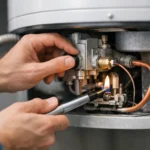
If your water heater has a built-in igniter, press the igniter button repeatedly while continuing to hold the pilot control down. You may hear a clicking sound. Watch through the viewing window for a small blue flame at the pilot burner.
If there is no igniter, use a long fireplace match or long-nose utility lighter only if the manufacturer’s instructions specifically allow manual lighting. Keep your hands and face away from the burner opening. Never use a regular short match, a candle, or a rolled piece of paper.
5. Keep holding the pilot control
Once the pilot lights, continue holding the knob or button down for about 30 to 60 seconds. This gives the thermocouple or flame sensor time to warm up. That safety component confirms there is a flame before it allows gas to continue flowing.
Release the control slowly. The pilot should remain lit. If it goes out immediately, repeat the process once or twice, allowing the required five-minute wait between attempts. Do not keep trying repeatedly if the flame will not hold.
6. Turn the control to ON
When the pilot remains lit, turn the gas control knob to ON. Set the temperature to your usual setting. For many households, 120 degrees Fahrenheit provides a practical balance of comfort, energy use, and scald protection, though your household’s needs may vary.
The main burner may not fire right away if the tank water is already warm. Give the heater 15 to 30 minutes, then check for warm water at a faucet. A fully cooled tank can take longer to recover.
What a Healthy Pilot Flame Should Look Like
A normal pilot flame is usually steady and blue, with a small amount of yellow at the tip possible on some units. It should reach the thermocouple or sensor properly and should not flicker wildly, lift away from the burner, or produce soot.
A weak yellow flame, frequent flickering, or a flame that fails to touch the sensor can mean the pilot assembly is dirty, the air intake is restricted, or the unit has a combustion problem. Cleaning and adjustment may sound simple, but gas burner work should be handled by a licensed professional. Improper adjustment can make a small problem worse.
Why a Pilot Light Keeps Going Out
A pilot going out once can happen after a gas interruption, a strong draft, or a temporary issue. A pilot that repeatedly goes out is different. It is usually telling you that a component needs attention.
Common causes include a failing thermocouple, a dirty pilot orifice, poor venting, a blocked combustion air screen, a malfunctioning gas control valve, or an issue with the gas supply. In power-vented equipment, pressure switches, fans, and electronic controls can also prevent ignition.
Age matters, too. Tank water heaters often become less reliable as sediment builds up and components wear. If your unit is leaking, rusting, making popping noises, or requiring frequent pilot relights, repair may not be the best long-term value. A professional assessment can help you compare the cost of repair with replacement before a complete failure leaves you without hot water.
When to Call a Water Heater Professional
Call for service instead of continuing to troubleshoot if the pilot will not light after a few careful attempts, lights but will not stay on, or the burner will not ignite after the pilot is established. Professional service is also the right choice when you see soot, smell combustion fumes, find water around the tank, or suspect a venting issue.
For homeowners and property managers, a no-hot-water problem can quickly disrupt the entire day. Airmaxx Heating & Air Conditioning provides dependable water heater diagnostics and repair, helping identify whether the issue is the pilot system, gas control, venting, burner assembly, or the water heater itself. Licensed service helps protect your comfort, your equipment, and your home.
A relit pilot should stay steady and produce reliable hot water without repeated attention. If yours does not, treat that as a reason to schedule service rather than a reason to keep resetting it.