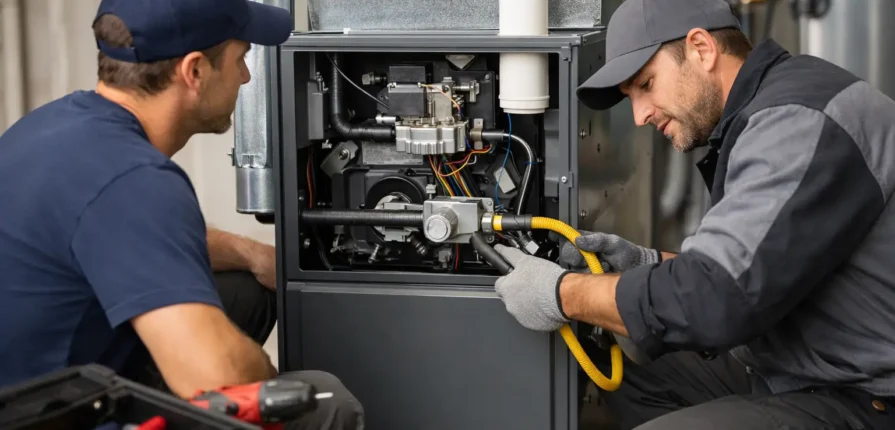
A new furnace should not be treated like a simple appliance swap. The gas furnace installation process affects your family’s safety, monthly energy use, airflow, and comfort for years to come. A properly installed system starts reliably on cold mornings, heats rooms more evenly, and operates as the manufacturer intended. A rushed or poorly matched installation can lead to higher utility bills, short cycling, noisy operation, and avoidable repairs.
For homeowners and property managers, knowing what happens during installation makes it easier to compare estimates, prepare the property, and recognize why licensed workmanship matters.
It Starts With the Right Furnace Size
The first step is not choosing the highest-efficiency furnace or the biggest unit that fits in the space. It is determining what the building actually needs. Furnace capacity is measured in BTUs, and the correct size depends on more than square footage.
A qualified technician considers insulation levels, window quality, ceiling height, ductwork, air leakage, the home’s layout, and local winter temperatures. Additions, basement renovations, and changes to windows or insulation can all affect the heating load. For a light commercial space, occupancy, equipment heat, operating hours, and zoning may also matter.
An oversized furnace can heat the space too quickly and shut off before it delivers consistent airflow. This short cycling may increase wear on components and leave some rooms uncomfortable. An undersized furnace can run for long periods without maintaining the set temperature during severe weather. The goal is a system that is properly matched, not simply more powerful.
Efficiency should be part of the conversation, but it is not the only factor. A high-efficiency furnace may lower fuel consumption, yet it can require changes to venting and condensate drainage. The best choice depends on the home, the existing system, the budget, and the expected length of ownership.
Reviewing the Existing System and Installation Plan
Before work begins, the installer should inspect the current furnace, ductwork, gas line, electrical supply, venting, thermostat, and drainage arrangement. This evaluation identifies whether the new equipment can safely connect to the existing infrastructure or whether updates are needed.
Ductwork is especially important. A furnace cannot perform well if supply ducts are too small, return air is restricted, or major leaks allow heated air to escape into unfinished areas. In some homes, modest duct modifications, a larger return, or better balancing can make a meaningful difference in comfort.
The contractor should also confirm the installation location has proper access, clearance, combustion air where required, and a safe path for removal of the old equipment. If a furnace is installed in an attic, crawl space, closet, or tight utility room, the work may take longer than a straightforward basement replacement.
Permits and inspections are not paperwork to skip when gas equipment is involved. Local requirements vary, but the work may require a permit and inspection to confirm that gas connections, venting, electrical work, and clearances meet applicable code. This protects occupants and can help avoid complications during a future home sale or insurance review.
Removing the Old Furnace Safely
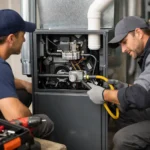
On installation day, technicians protect nearby floors and work areas before disconnecting the old unit. They shut off the gas and electrical supply, isolate related connections, and remove the existing furnace according to safe handling procedures.
This stage may reveal issues that were not visible during the estimate, such as corroded vent pipe, deteriorated duct connections, an undersized gas line, or water damage around the equipment. A dependable contractor explains what was found, why it matters, and what correction is needed before proceeding. No one benefits from hiding a safety issue behind a new furnace.
If the project involves replacing a conventional furnace with a high-efficiency condensing model, the old metal flue may no longer be suitable. The new furnace may use approved vent piping and need a condensate drain. These changes are normal, but they should be planned and installed correctly rather than improvised at the job site.
Installing Gas, Venting, Electrical, and Drain Connections
The new furnace is positioned on a stable, level base or platform and connected to the duct system with properly sealed transitions. Air leaks at the furnace cabinet or plenum can waste heated air and reduce system performance, so the connections should be secure and sealed.
The gas piping is then connected and tested for leaks. This is critical work that should only be handled by qualified, licensed professionals. Gas pressure must be appropriate for the equipment, the piping must be properly supported, and the shutoff valve must be accessible. If the existing gas line does not have enough capacity for the new furnace and other gas appliances, it may need to be upgraded.
Venting receives the same careful attention. A conventional furnace generally vents combustion gases through approved metal venting, while a high-efficiency unit typically uses dedicated intake and exhaust piping. Vent pipe sizing, slope, termination location, and clearances from windows, doors, and other building openings all matter. Incorrect venting can create serious carbon monoxide and moisture risks.
The technician also completes the electrical connection, including a service switch and any required disconnect. If the furnace uses a condensate drain, the drain line must be routed and trapped correctly to prevent leaks, freezing, or drainage problems. In homes with air conditioning, the evaporator coil and related connections may be inspected at the same time to ensure the full heating and cooling system works together.
Startup Testing Is Where Quality Shows
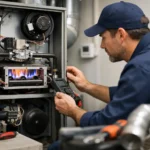
A furnace is not ready just because it turns on. After installation, the technician should start the system and verify its operation under normal conditions. This includes checking ignition, burner flame, gas pressure, temperature rise, blower performance, safety controls, thermostat operation, and airflow.
Combustion testing is a key safety step for gas-fired equipment. It helps confirm that the furnace is burning fuel correctly and venting as intended. The technician should also check for gas leaks and confirm that carbon monoxide detectors are installed and functioning in appropriate areas of the home.
If airflow needs adjustment, the installer may set blower speeds or discuss duct improvements. A furnace can be correctly sized and still deliver uneven temperatures if the distribution system needs attention. This is why a whole-system approach is more valuable than a quick equipment replacement.
Final Inspection and Homeowner Walk-Through
Once testing is complete, the job should be cleaned up and reviewed with the homeowner or property representative. You should know where the furnace filter is located, what size filter to use, how often to replace it, and how to operate the thermostat. You should also receive the equipment documentation, warranty information, and any permit or inspection details that apply.
Ask the technician to explain normal operating sounds and the signs that warrant a service call. Repeated cycling, burning odors that do not fade after initial use, unusual rattling, water around the furnace, or a carbon monoxide alarm should never be ignored. For a gas smell or suspected carbon monoxide issue, leave the building and contact emergency services or the gas utility before arranging HVAC service.
At Airmaxx Heating & Air Conditioning, the focus is not just on getting heat back on. It is on installing the system safely, testing it thoroughly, and helping customers understand how to protect their investment.
How Long Does Furnace Installation Take?
A standard replacement often takes most of one day, but the timeline depends on the scope of work. A straightforward furnace-for-furnace change in an accessible location may be completed faster than an installation requiring duct modifications, new venting, gas line work, electrical updates, or permit coordination.
The least expensive estimate is not always the best value if it leaves out essential code work, start-up testing, or needed system improvements. A clear written estimate should identify the furnace model, efficiency rating, installation work included, permit expectations, warranty coverage, and any conditions that could affect the final price.
Before installation day, clear a path to the furnace, remove stored items from the work area, and make arrangements for pets and children. If the system will be off for part of the day during cold weather, plan for temporary warmth in occupied areas.
A gas furnace is a long-term comfort system, not a purchase to rush. Choose qualified professionals who measure carefully, follow code, test every critical connection, and stand behind the work. That attention to detail is what helps your new furnace deliver safe, dependable heat when you need it most.